
Welcome to the CHI+MED project
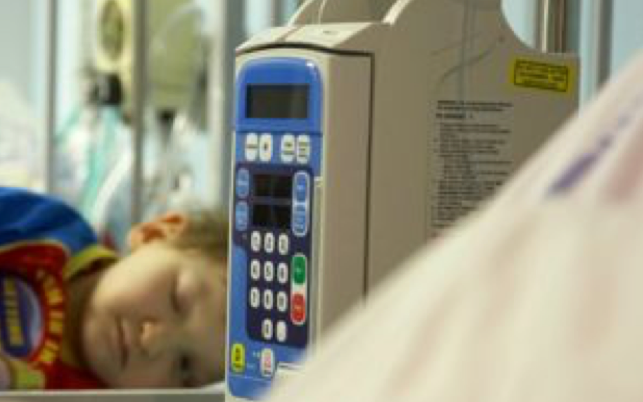
CHI+MED (Computer-Human Interaction for Medical Devices) was an EPSRC-funded project (EP/G059063/1) which ran for 6 years from late 2009, to improve the safety of interactive (programmable) medical devices, such as infusion pumps. By understanding more about device design and human factors, medical errors can be reduced thus saving lives.
Our goal was to learn more about medical devices and how people design, buy and use them in the real world. From this understanding we investigated how to reduce the likelihood and consequences of human error. We worked with patients and their carers, nurses and other medical practitioners, manufacturers who create medical devices, NHS staff who purchase them and regulatory bodies who oversee patient safety.
Throughout our six year programme we also worked with a wide variety of people who are linked by interactive medical devices which deliver essential medication.
Our work blended computer science, cognitive psychology and medicine. We investigated how devices are designed with a focus on how users have to program them, what can happen when erroneous inputs are given and how new technology can help. We ran laboratory-based experiments to understand the causes of human error and how they can be prevented. We examined how people perform tasks in real-world situations, for example what happens when a busy nurse is called away in the middle of setting up an infusion pump? How likely are they to make a mistake when they return to complete the task?
We also explored interventions that can help manufacturers, clinicians, procurement staff and patients to help reduce the potential human error. Based on the understanding gained from these separate strands we developed analysis tools based on mathematical models of devices, human behaviour and of the wider situation to help predict where problems will occur. We also explored interventions that can help manufacturers, clinicians, procurement staff and patients to help reduce the potential consequences of human error.
On these pages you can read about the separate strands of our research and how we linked them together to answer the question ‘how can we make medical devices safer in practice?’
Download our brief overview booklets ‘Insights from CHI+MED’ and ‘Manifesto for medical devices’: